
Forest Biomass & Harvesting Efficiency
“What if we could recover more volume without harvesting more trees by maximizing the potential of every tree?” ~ Pamela Hurley-Poitras, NHRI
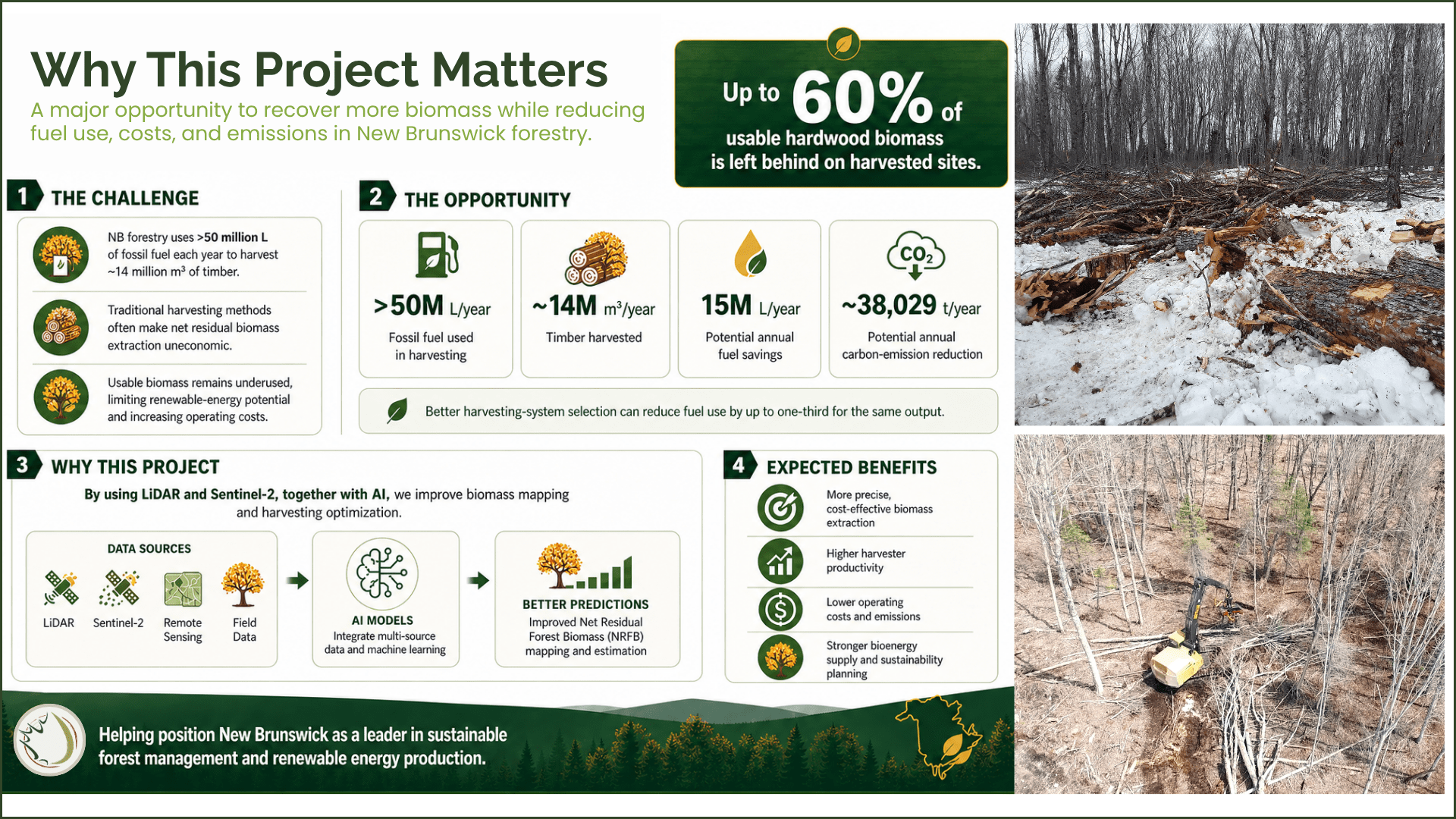
In New Brunswick hardwood operations, the presence of biomass is well established. What is less consistently captured is how much usable biomass is available, where it is located, and how harvesting systems can recover it economically while reducing fuel use.
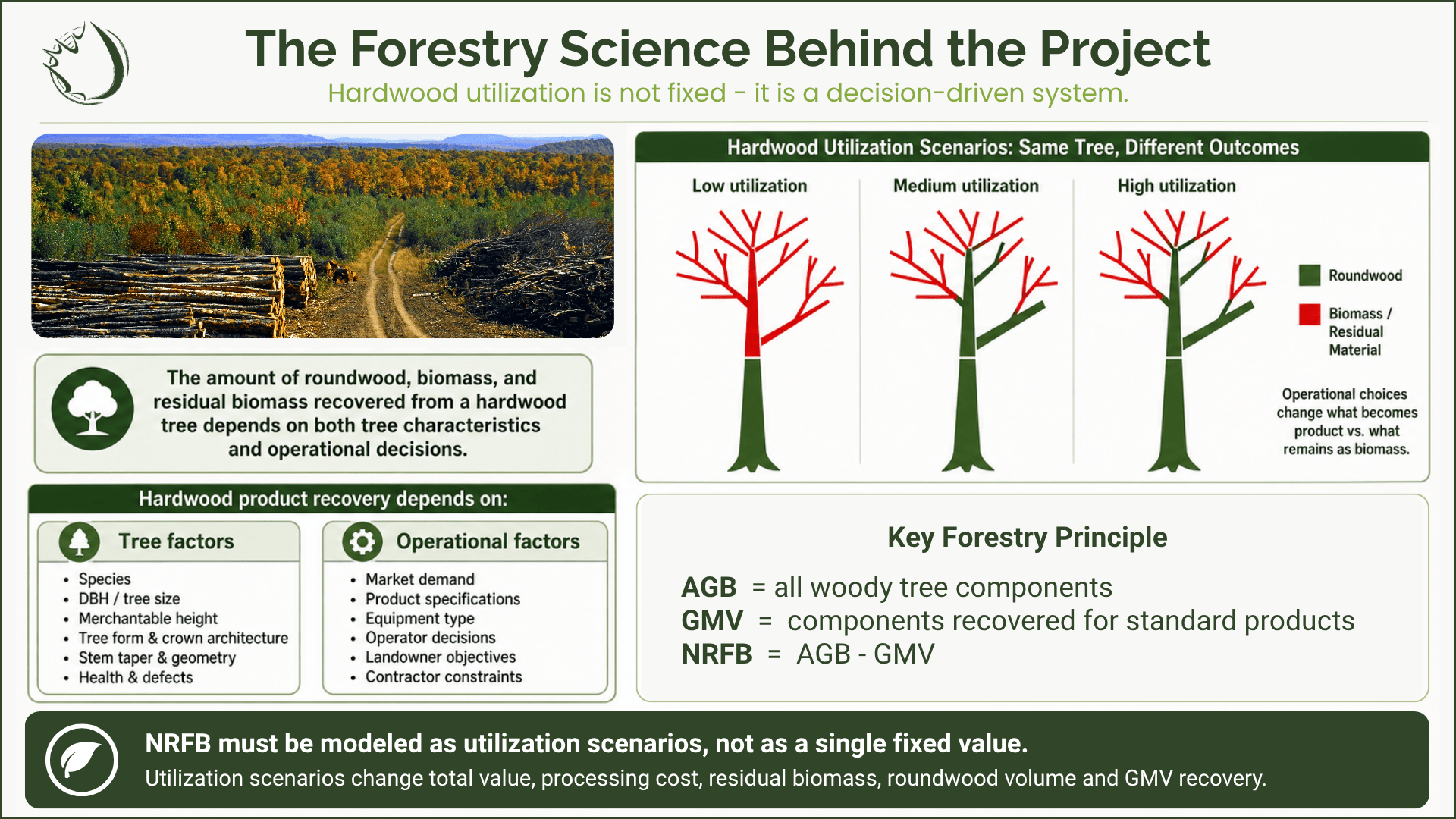
These outcomes vary because utilization is shaped by operational decisions, including merchandizing strategy, equipment capabilities, and market conditions.
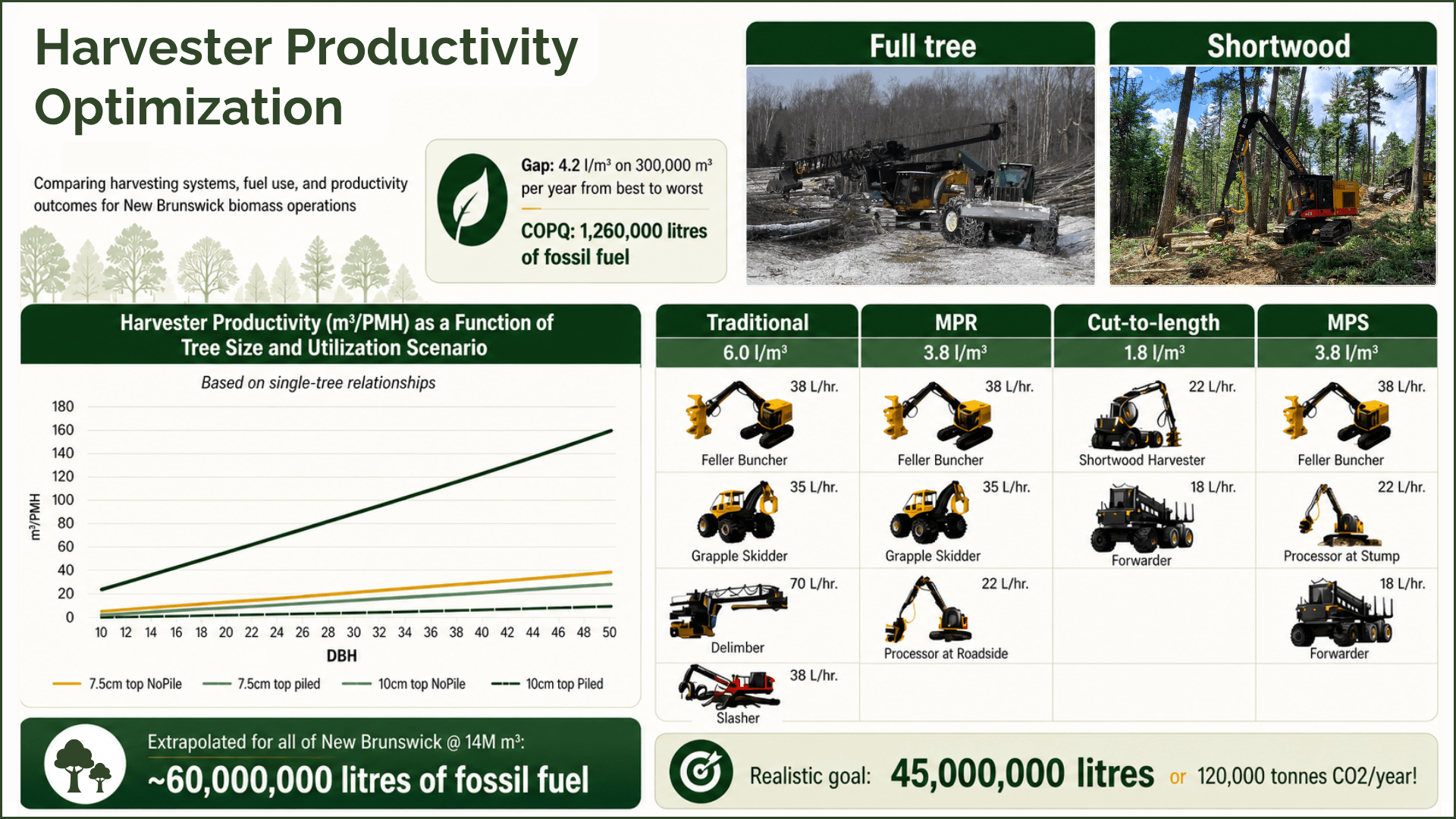
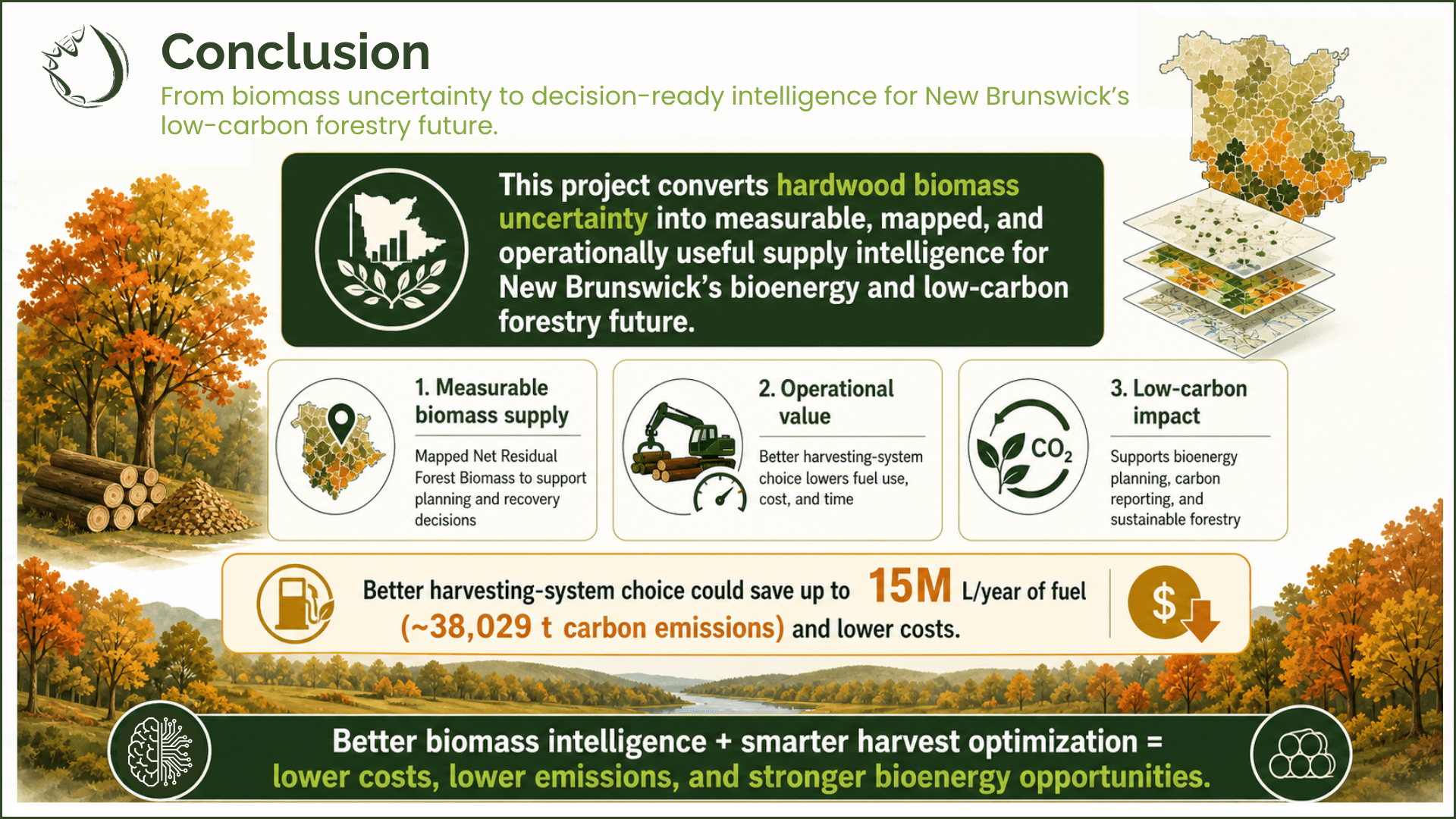
Current harvesting approaches can leave a large share of usable hardwood biomass behind, while the sector consumes more than 50 million litres of fossil fuel annually.
What we measure—and what is not captured
We define Gross Merchantable Volume (GMV) as the portion of the tree used for conventional roundwood, and Above-Ground Biomass (AGB) as the full tree. The difference between the two represents residual biomass, the material left behind after harvesting.
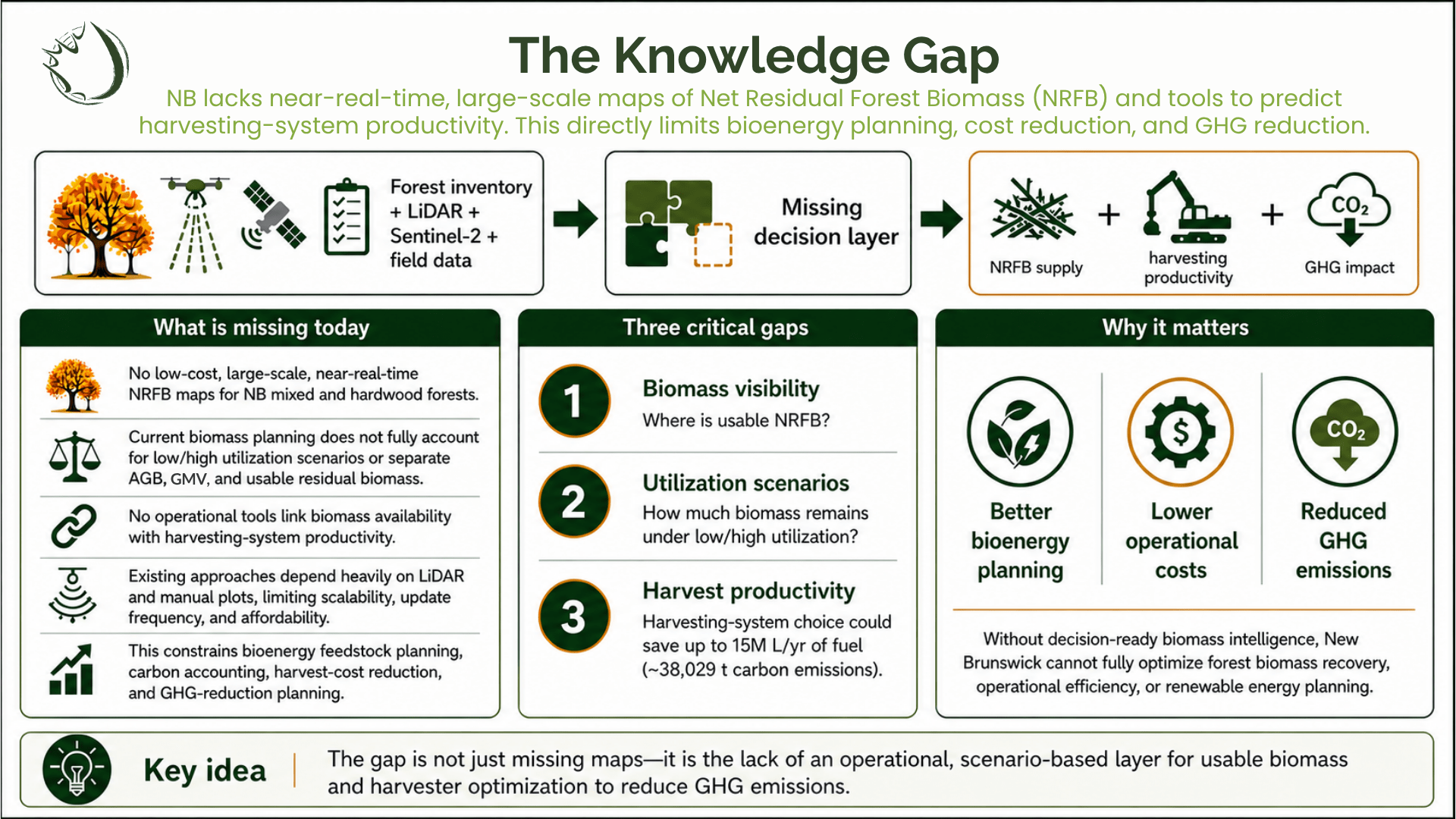
While GMV is well established and consistently measured, residual biomass is not routinely quantified at operational scales. This limits the ability to integrate it into planning and decision-making.
Current understanding is limited by reliance on expert judgement and fragmented measurements that do not scale across operational landscapes.
Making residual biomass visible
To address this gap, we are developing large-scale estimates of net residual forest biomass across New Brunswick. The goal is to make residual biomass measurable so it can be incorporated into operational planning.
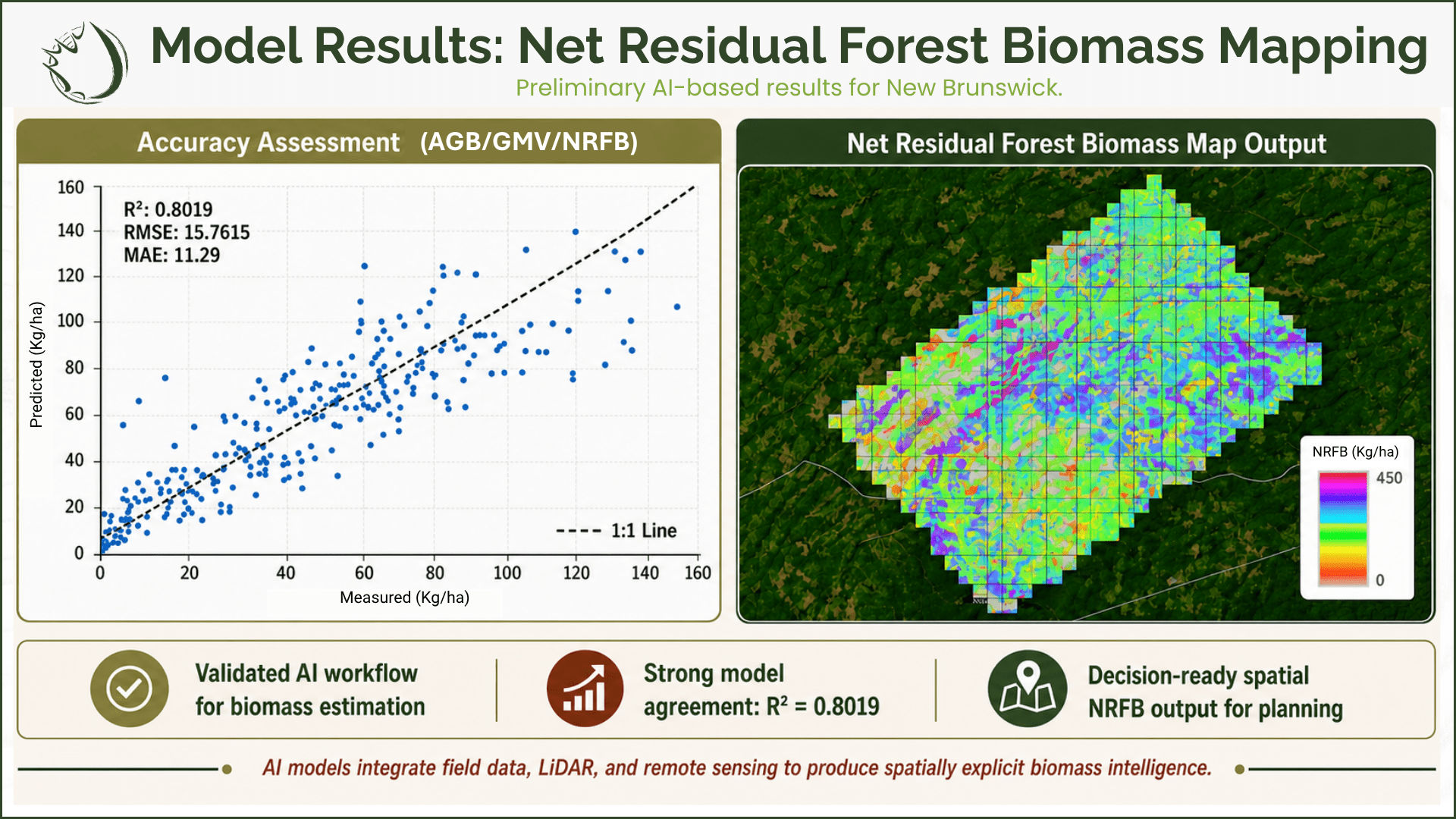
This approach combines LiDAR, Sentinel-2 imagery, and artificial intelligence to produce consistent estimates of residual biomass across landscapes.
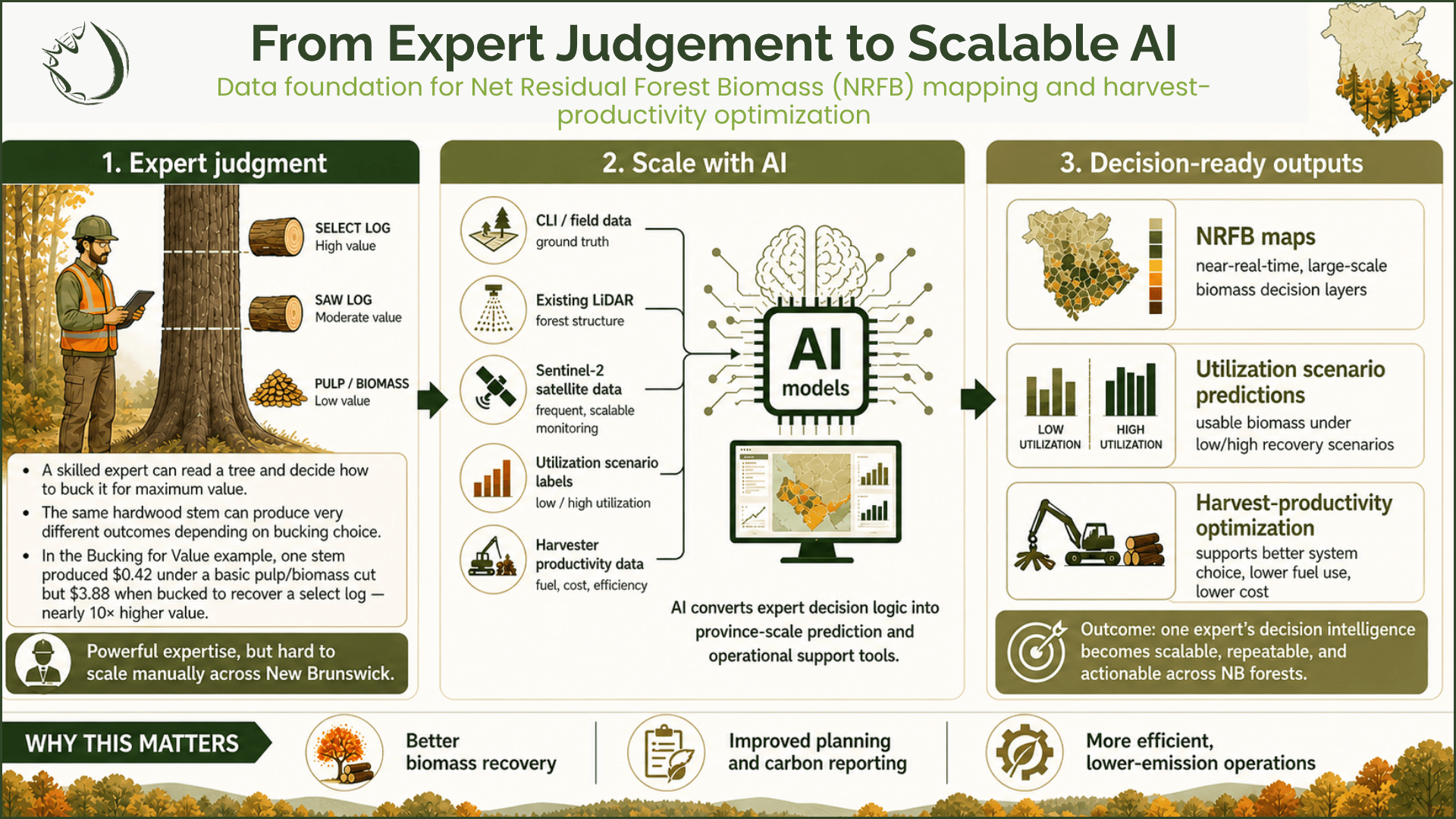
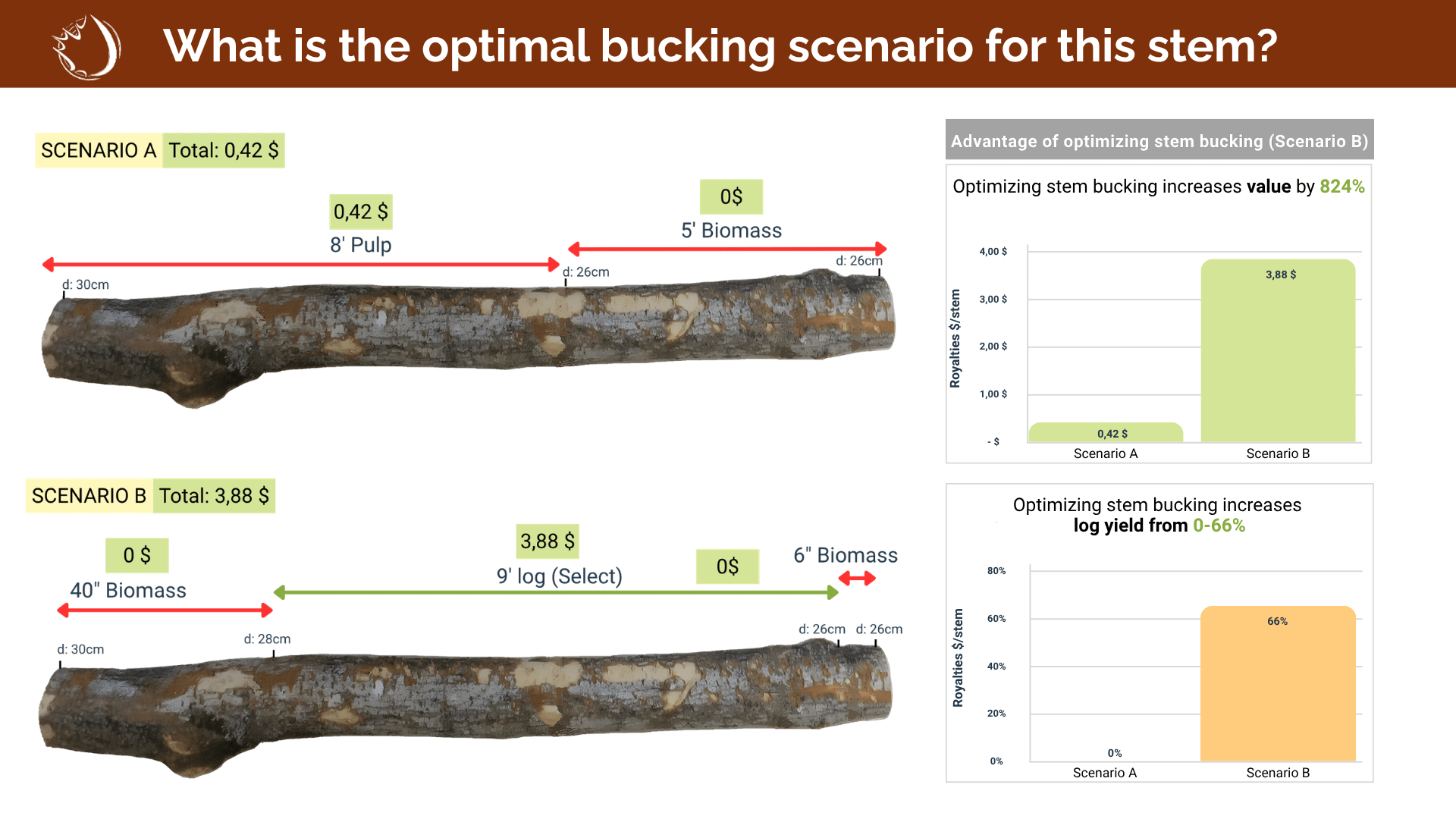
Bucking for Value Example
These models are designed to support operational decisions, including harvesting efficiency and productivity optimization.
Project Impact
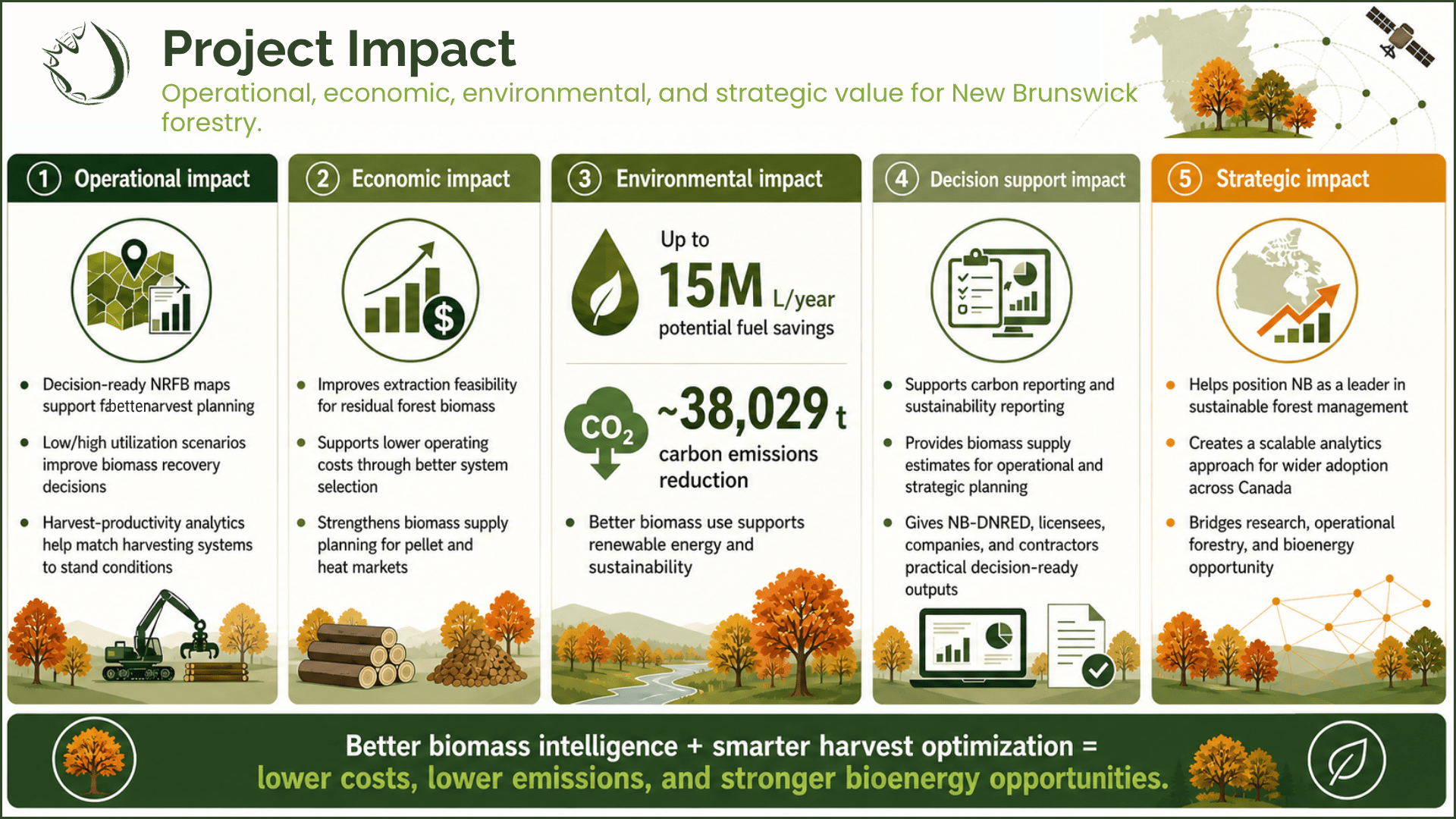
The goal is to support integration into operational workflows and enable broader adoption across forest management and bioenergy supply chains.
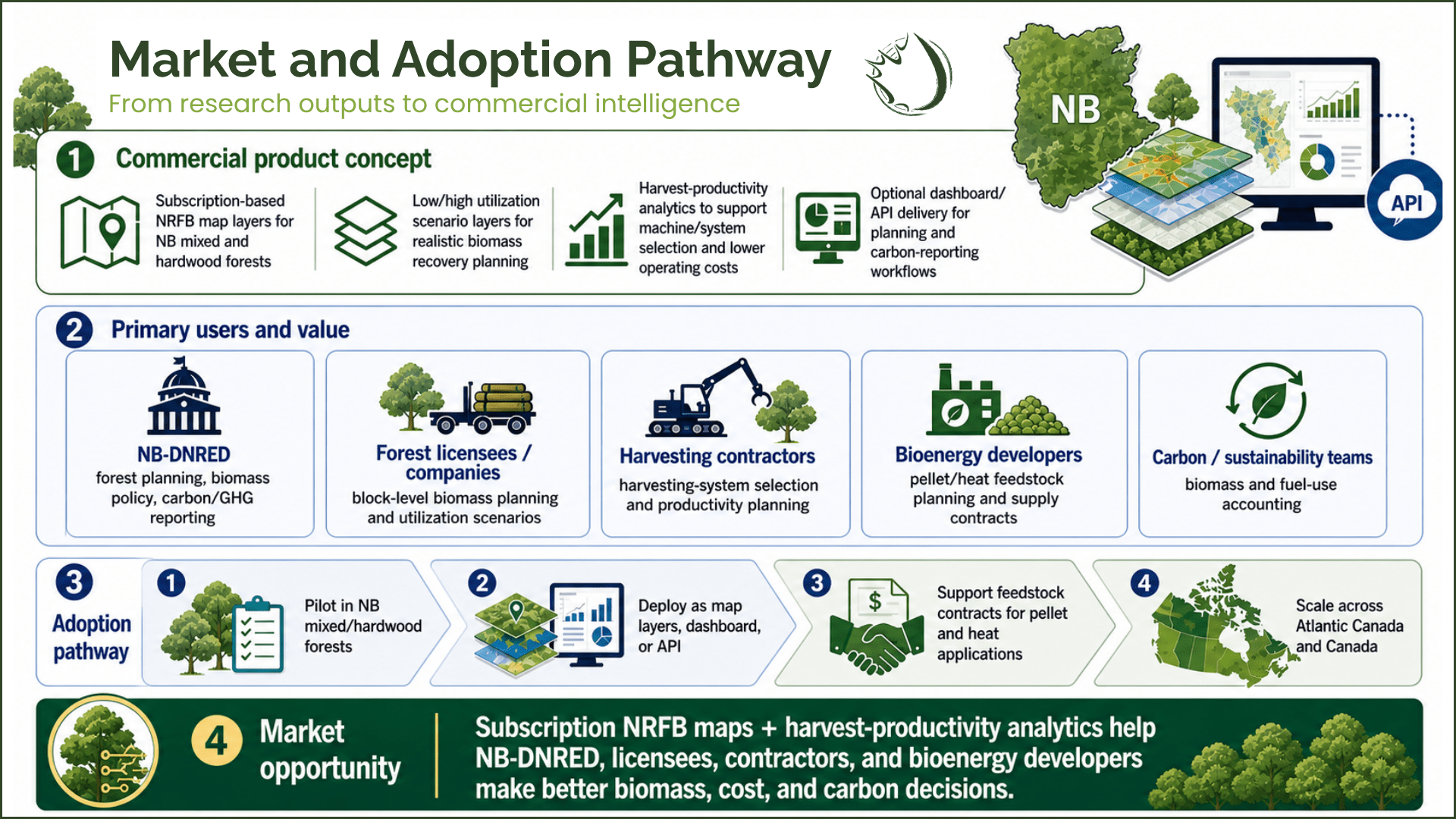
Residual biomass is present in every harvest but is not consistently measured or integrated into decision-making. Improving its visibility supports better alignment between biological potential and operational outcomes.
Learn more or get in touch
If you’re interested in how this work can support your operations, research, or planning, we’d be happy to connect.
- Discuss potential applications in your organization
- Explore collaboration opportunities
- Request additional information or materials